
The pearl in the cave world of Bulgaria
The Yagodin Cave is the pearl of the cave world of Bulgaria. The exploration of the cave began in 1965 by the "Studenets" speleoclub - the town of Chepelare, headed by Dimitar Raichev. 9 young people from the club are also included in the expedition. For 12 days, archeological drilling surveys are being carried out in the entrance part/ the Vestibule/ of the cave. Mapping the first floor and penetrating the second floor is done.During this expedition, interesting archeological finds were discovered, which gave reason to conduct three more specialized expeditions. In parallel with the archaeological research, specialized speleological studies such as the mapping of the second floor, microclimatic and biospeleological studies are carried out. As a result of the expeditions, 8500 meters of the cave were initially explored.
In 1982-1986, the cave was re-mapping and new galleries and sections were discovered, its length reaching 10,500 meters. Two artificial tunnels were dug /the current entrance and exit/. The cave has been landscaped and the third floor is open to visitors. 4 meters after the natural entrance of the cave (first level) an Eneolithic dwelling was discovered - a local ceramic center, the only one in Europe preserved in its natural form.
Yagodina Cave is located 20 km south of Devin and 3 km southwest of the village of Yagodina. It is located on the right bank of the Buinovska River (the beginning of the Vacha River), which also formed the longest and most picturesque gorge in Bulgaria - Buinovsko, with a length of 7 km. The cave can be reached on the road Devin - Dospat, turning left at the Teshel dam wall. Due to the fact that the road from Teschel to the cave is single-lane and more than 35 local buses cannot move.
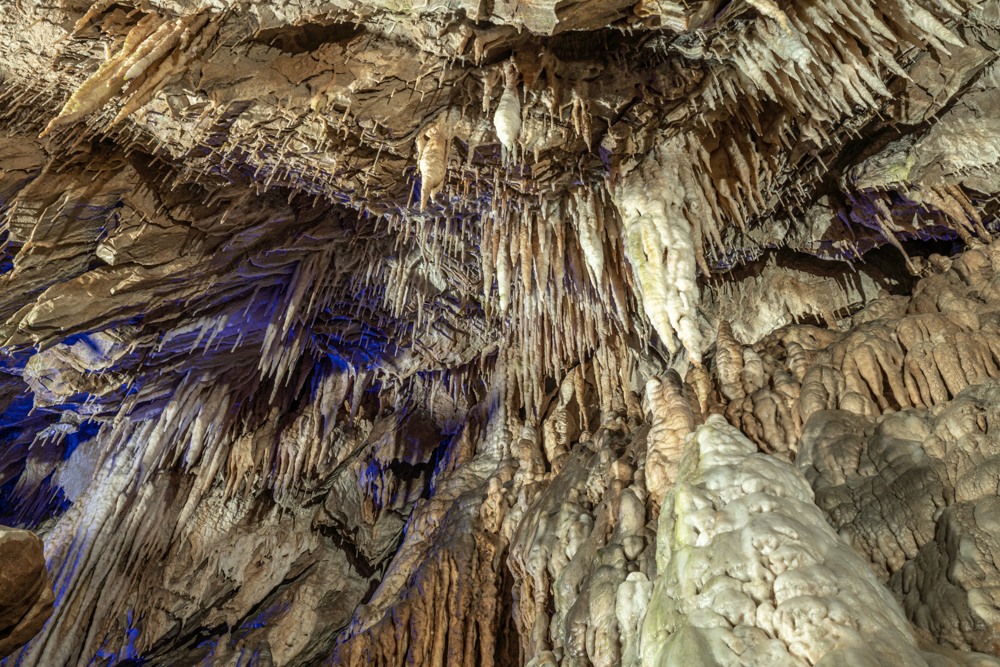
The Yagodina cave /Imam's hole/ is named after the nearby village located next to it - the village of Yagodina region. Smolyan. According to its morphology, it is a multi-storied, labyrinthine cave. It is 10.5 km long /the third longest in Bulgaria and the longest in the Rhodopes/ and is located on three floors, of which only the third (lowest) is upgraded and electrified. A 1,250-meter path has been built in it for tourists. The entrance and exit to this floor are artificially excavated tunnels with a length of 150 and 80 m, respectively. The third entrance is the natural one, and it was from this that the initial investigations began in 1963. At the beginning of the natural entrance, an Eneolithic dwelling dating from the 4th millennium BC was discovered Christ. Part of the route - 360 m. is suitable for disabled people. Magnificent and beautiful formations can be seen along the entire tourist route – stalactites, stalagmites, stalactons, hellectites, sinter lakes, leopard skin, dendrites, draperies and one of the most unique formations – cave pearls. A total of twenty-two types of formations out of the world-famous 28 types can be seen in Jagodinska cave.
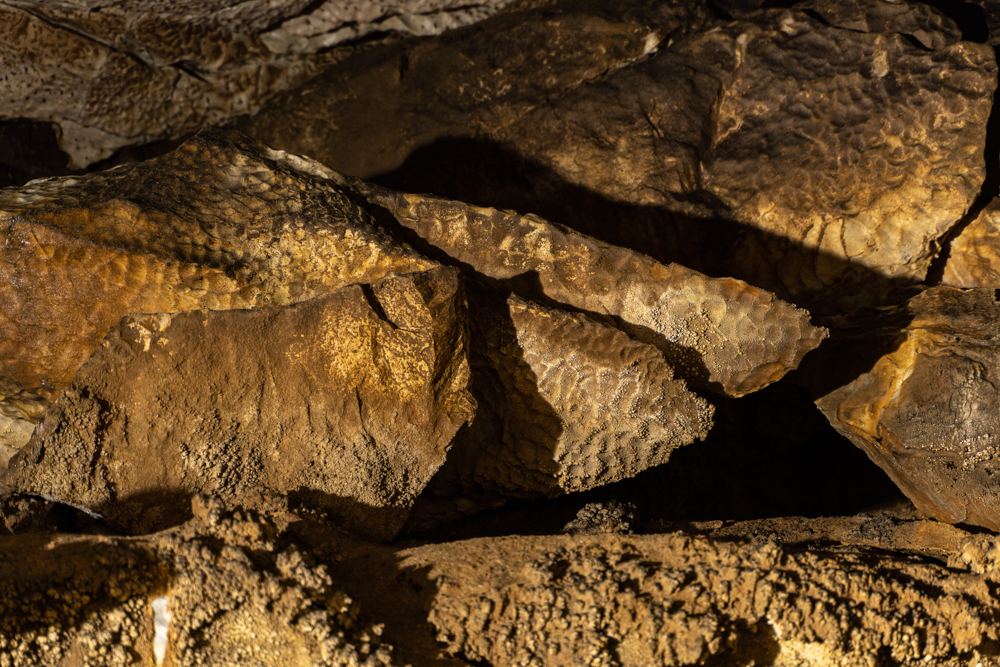
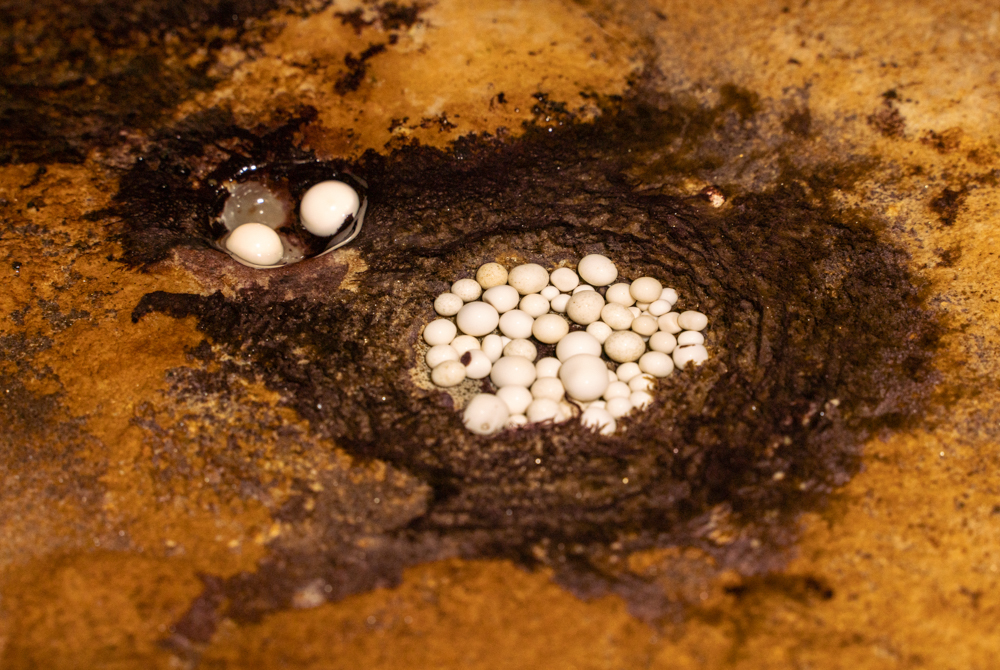
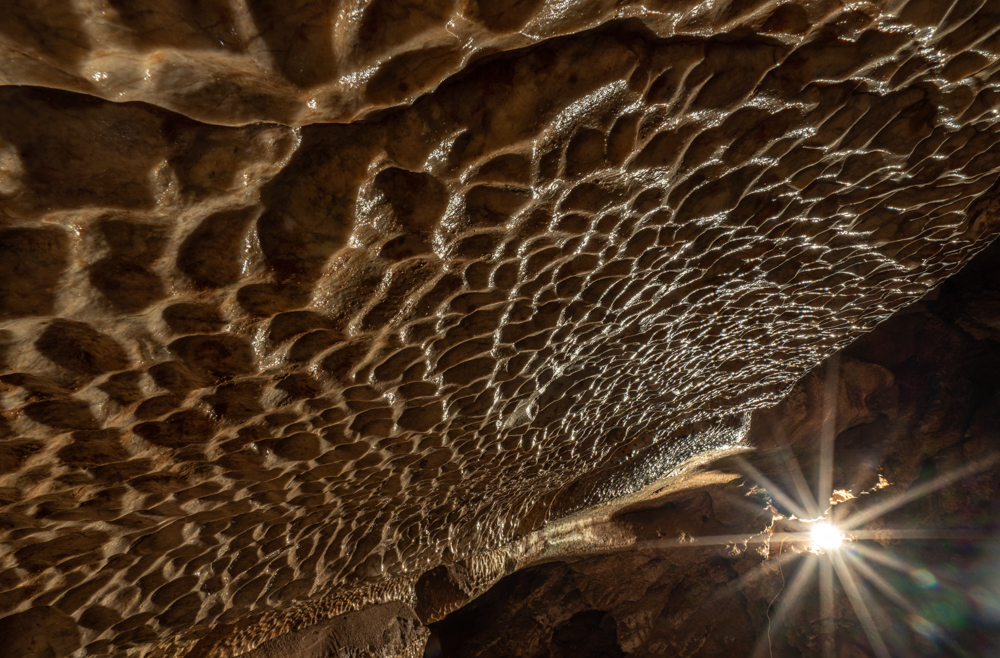
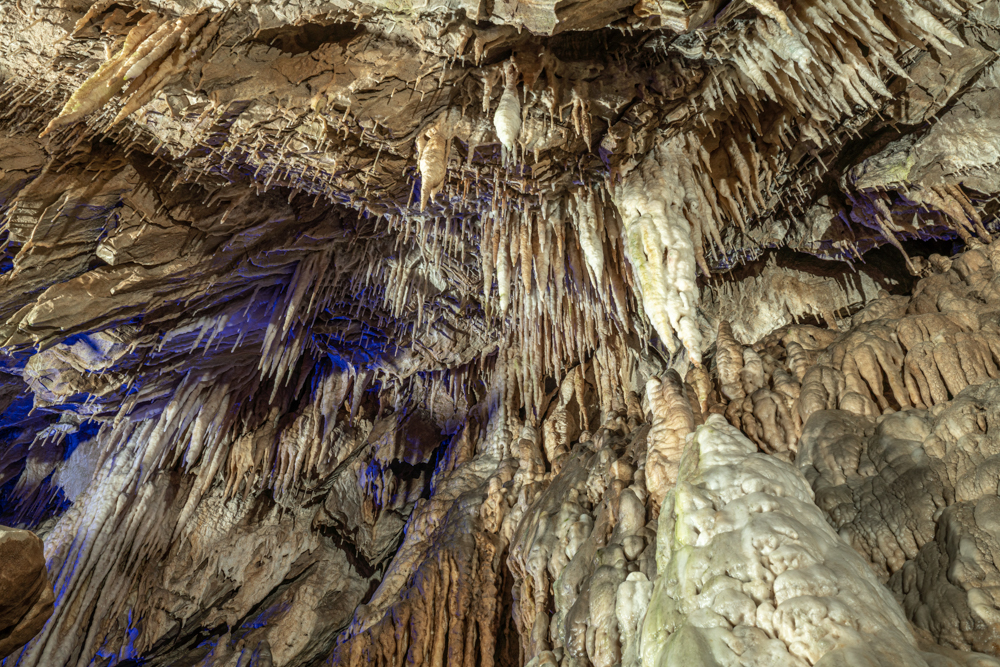
Amazing rock formations

Some of its internal layouts are reminiscent of Santa Claus, Snow White and the Seven Dwarfs, the Virgin and Child, Pigot and Penda, animal forms and fantastical figures.
In the cave there is a ritual hall where civil marriages are performed.
The temperature of the landscaped area is +6 ºС - constant, year-round, the humidity is 85-91%. Altitude at the entrance – 930 meters, exit – 937 meters, elevation difference +7 meters (flat and horizontal cave).
Due to the huge total length of the underground galleries, the Jagodin Cave is rich in animal and plant species. From the animal world, there are various types of bats, cave grasshoppers, spiders, troglobiotes with a representative - Compodeus, and others. and from the flora - lichens, mosses, molds and mushrooms.
The bats in the cave
During the different seasons, a total of 11 species of nightingales have been recorded in the cave: Six of the species found in the area are among the priority species for conservation throughout Europe - the large and small horseshoe bat, as well as four species of nightingale: the large, sharp-eared, long-eared and tricolor. During the summer months, the most important for bats is the natural entrance to the cave. In the period August 15 to September 30, the cave is an important place for autumn gathering. At this time, around the entrance, numerous male and female specimens of about 9-10 species of bats gather every evening. Mainly the large and small horseshoe crab winter in the cave, rarely other species.
Work time
Year round without a day off.
Winter season / 01.11 to 30.04. / – от 10:00 до 16:15 часа
Summer season / from 01.05 to 31.10./ – от 9:00 до 16:15 часа
Lunch break at the discretion of the Supervisor.
Visits to the cave are organized with a tour guide every round hour. Visitors should be at the cave entrance 10 minutes before the round talk time.
Entrance fee to the "Yagodin Cave":
Children up to 6 years old - free of charge
Children from 6 to 18 years old – 5.00 BGN
Adult over 18 years old - 10.00 BGN
Students 8.00 BGN. with identification / international student identification card ISIC card /
People with disabilities with a TELK decision up to 70% with identification - BGN 5.
People with disabilities with a TELK decision of 71% with identification - free of charge
In the absence of a group of four adults or eight children, the price of entry -40.00 BGN
 English
  Bulgarian
  Greek
Greek