
"Sharenka" cave
We live in a country with thousand-year-old traditions. Seen at first glance, threads connect us to the past, and only its listening and recognition makes us aware of them. And in the future, this is our past that you touch. That is why their ytopia is the beginning of our ytopia - it is not a predicted ytopia. That's why, both by accident and by surprise, the intepec is so alive.
Luckily for us, Sharenka Cave is a place that has enjoyed great interest from the local Thracian tribe, Kolaleti. Thanks to the rich mineral deposits and useful underground resources in the surrounding lands, the Thracians inhabited these lands and we have a serious cultural and historical heritage from their activity.
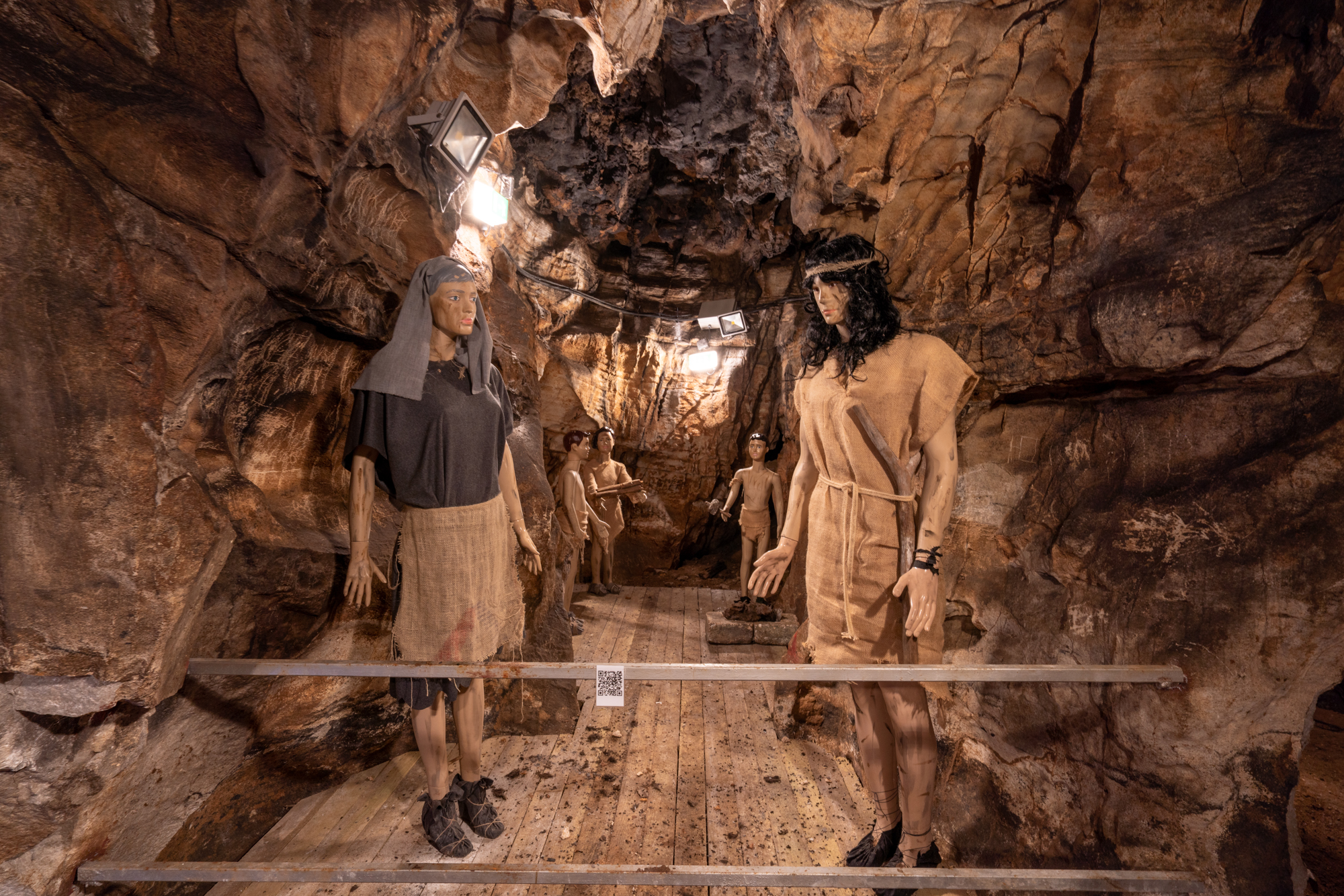
We know for sure that the cave was used by them for mining ore, but also as a dwelling. In the soft rocks, the Thracians managed to dig new tunnels, widen the natural cracks, thanks to which today it is so easy to pass through the cave. They can clearly see the areas in which they worked. As you enter the cave by the steep metal stairs, on the left side there is a recreation of their abode. Here they met their daily needs, cooked, ate and spent the night when necessary. Like any cave, here they had natural shelter and a constant temperature suitable for life.
General information:
Sharenka cave is a cave-museum, located in a marble massif in a deep gorge, about 2 km from the town of Madan. It bears the name of the largest district in Madan - Sharenka district. The cave is reached by an asphalt road, and for those who like hiking, there is a mountain path about a kilometer long. A wooden gazebo with a fountain has been built right next to the entrance, and you can hear the falling waters of the waterfall in the canyon nearby.
"Sharenka Cave" is a relatively small cave, located at 830m above sea level. The entrance to the cave is located in a marble rock and after a small slope you reach an underground corridor leading to the two small galleries. Archaeologists have established that ore mining was carried out in the cave, it was inhabited as early as the Bronze Age (16-12 centuries BC). There is a slit in the ceiling of the Great Hall, which as a natural chimney played an important role in the mining and smelting of ore. In the "Sharenka Cave" there is a restored exhibition of 10 wax figures in natural human size, a hearth, tools of labor, as well as household utensils.
The cave was reconstructed under a joint project of the municipality of Madan and the Greek municipality of Keramoti, with the aim of promoting the cultural and tourist attractions of the two twinned municipalities. According to the project, two tourist routes have been identified. Access to the sights along both routes are numerous tourist facilities for recreation.
Its entrance is located in a marble rock and after a small slope of 4-5 m it reaches an underground corridor (gallery). The gallery leads to the small hall. It has an irregular shape with an approximate area of 100 sq.m. Two narrow corridors lead from the Small Hall. The steep corridor descends into the Great Hall.
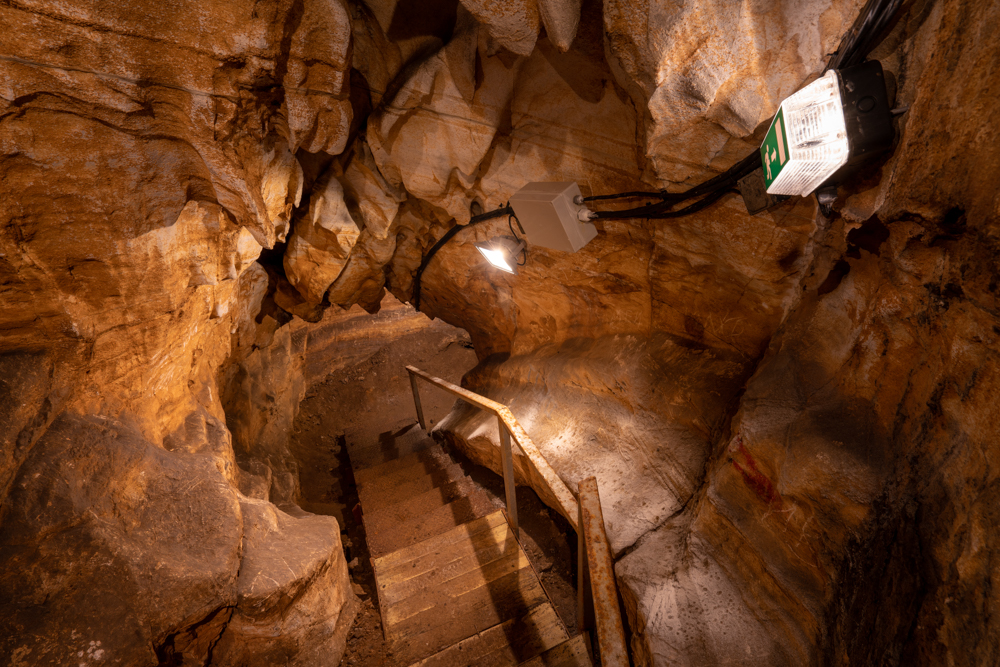
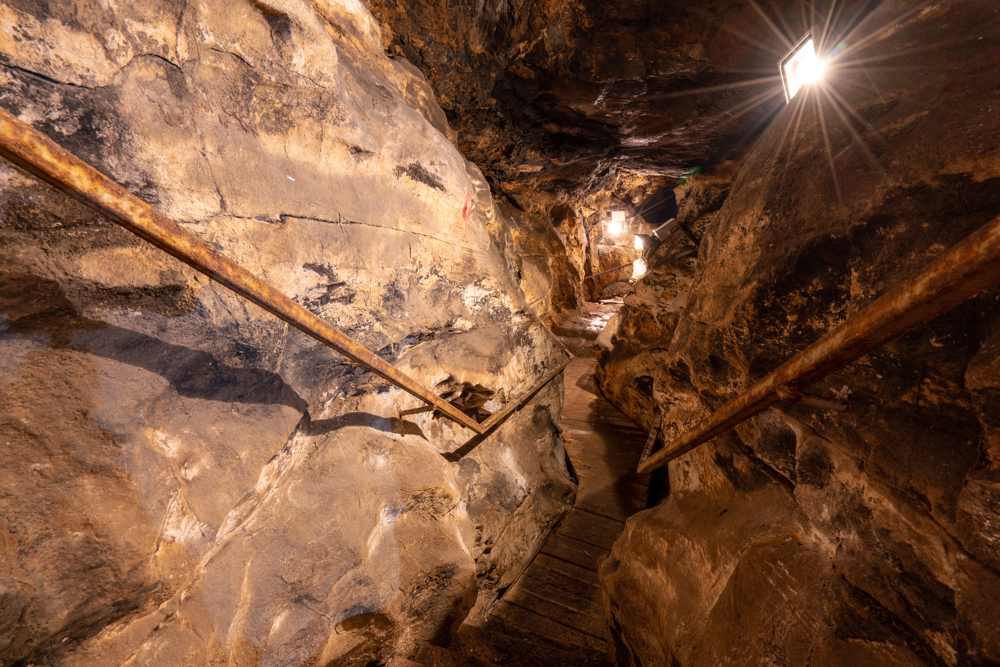
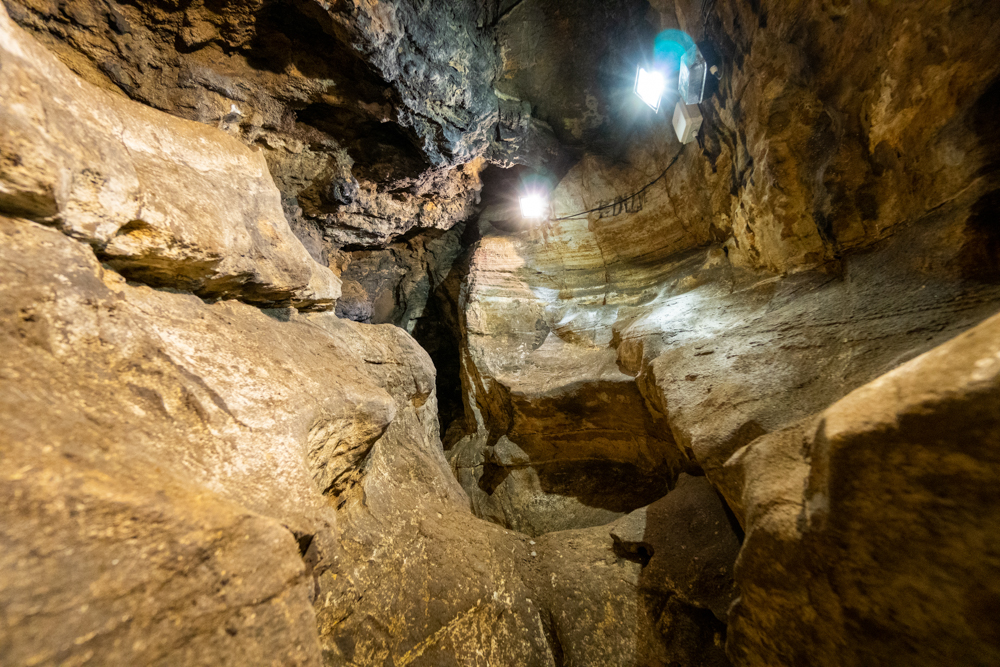
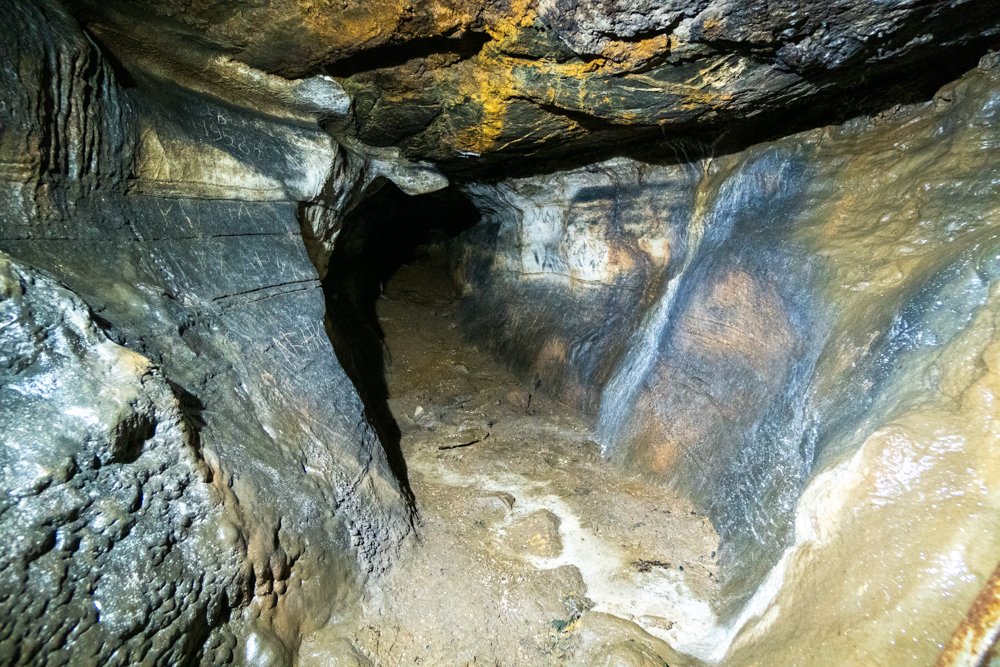
The final, largest gallery of the cave has numerous natural and carved niches. Here was the main mining. In fact, from here there is a tunnel dug by them that goes out into the entrance gallery. Curious, isn't it?
Today in this hall there is a recreated Thracian family. There is also a special augmented reality app that will allow you to meet live with a young Thracian family that once lived here.
 English
  Bulgarian
  Greek
Greek